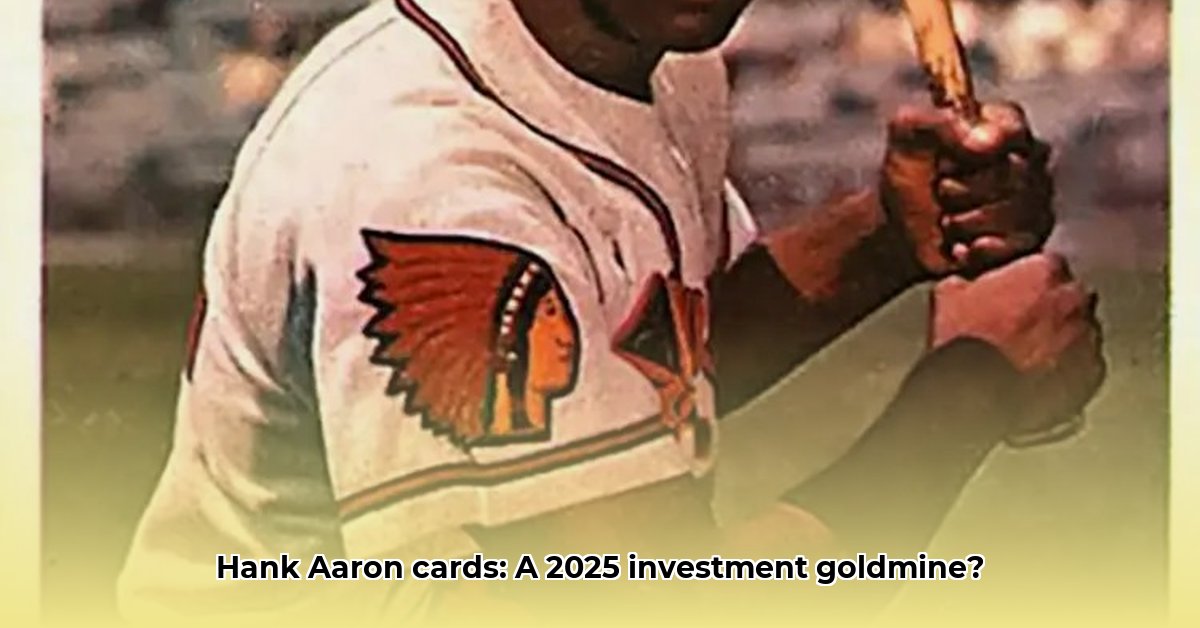
Hank Aaron. A legend on the baseball field, and now, a potential goldmine in the world of baseball cards. This guide provides actionable intelligence for collectors, dealers, and investors navigating the exciting—and sometimes treacherous—market of Hank Aaron baseball cards. Whether you're a seasoned collector or a curious newcomer, we'll equip you with the knowledge and strategies to make informed decisions.
Understanding Hank Aaron Card Values: More Than Just Cardboard
The value of a Hank Aaron card is multifaceted. It's not simply about age; condition, rarity, and historical significance all play crucial roles, mirroring the complexities of other valuable collectibles like classic cars. A pristine, rare card from his early career commands a significantly higher price than a common card in poor condition. Early cards, especially those from the 1950s, are highly prized due to their lower print runs and historical significance. The 1954 Topps rookie card, for example, stands as the undisputed pinnacle of any serious Aaron collection. What factors beyond age significantly impact a Hank Aaron card's value?
The Importance of Grading and Authentication: Protecting Your Investment
Professional grading services, such as PSA (Professional Sports Authenticator) and SGC (Sportscard Guaranty), are essential. They rigorously assess a card's condition, assigning a grade that directly impacts its value. This grade acts as a critical safeguard, assuring buyers of authenticity and quality. However, remember that grading contains an element of subjectivity; slight variations in standards between companies can affect final pricing. The market, unfortunately, also includes counterfeit cards. Therefore, purchasing only from reputable dealers with established reputations and utilizing professional authentication services are crucial steps to avoid costly mistakes. How can professional grading services mitigate the risk of acquiring counterfeit cards?
The Risks of Investing in Hank Aaron Cards: Navigating the Market
The baseball card market, while exciting, involves inherent risks. Understanding these risks is crucial for informed investing:
| Risk Factor | Description | Mitigation Strategy |
|---|---|---|
| Counterfeit Cards | Fake cards are prevalent, leading to potentially substantial financial losses. | Purchase only from established, reputable dealers with transparent authentication processes. |
| Market Fluctuations | The value of baseball cards is subject to market shifts, causing prices to fluctuate. | Diversify your collection; don't concentrate on a single card or era. Stay informed about market trends and broader economic conditions. |
| Condition Degradation | Improper storage can damage cards, impacting value. | Store cards in protective sleeves and cases, away from light, moisture, and temperature extremes. |
| Subjective Grading | Grading involves some subjectivity, potentially leading to slight variations in grades across different services. | Consider multiple grading opinions for high-value cards. Understand the grading criteria of different companies. |
| Lack of Strict Regulation | The vintage card market lacks a completely centralized regulatory body. | Stay updated on industry news and any changes in regulations. |
Investment Strategies for Different Types of Collectors
Strategies vary depending on your profile and investment horizon:
1. Serious Collectors (Short-Term, 0-1 Year):
- Prioritize a high-grade 1954 Topps rookie card if budget permits.
- Diversify with key cards from 1955-1957.
- Utilize professional authentication services.
2. Serious Collectors (Long-Term, 3-5 Years):
- Build relationships with reputable dealers.
- Monitor market trends continuously.
- Expand your collection beyond the 1950s.
3. Casual Collectors (Short-Term, 0-1 Year):
- Start with affordable, lower-grade 1950s cards to gain experience.
- Learn basic authentication techniques.
- Consider mid-grade cards from later years.
4. Casual Collectors (Long-Term, 3-5 Years):
- Gradually build your collection based on budget and preferences.
- Research specific card types and variations.
- Engage with online collecting communities.
5. Dealers/Appraisers:
- Invest in advanced authentication technology.
- Enhance grading expertise for staff.
- Consider specializing in specific Aaron card types.
6. Investors:
- Actively monitor market trends and economic indicators.
- Diversify across different vintage sports card brands.
- Develop a long-term investment plan.
Beyond the Rookie Card: Exploring Other Valuable Hank Aaron Cards
The 1954 Topps rookie card isn't the only valuable card. Other significant cards include those from sets like Johnston Cookies and variations such as "double-header" or "team issue" cards. Thorough research into these variations is crucial for maximizing investment returns. What are some lesser-known Hank Aaron cards that hold significant value?
How to Authenticate Vintage Hank Aaron Baseball Cards
Authenticating vintage Hank Aaron cards requires a keen eye and methodical approach. Counterfeit cards are a significant risk, especially for the highly sought-after 1954 Topps rookie card.
Visual Inspection: Your First Line of Defense
Meticulous visual examination is the first step. Use a magnifying glass (loupe) and high-quality reference images of authentic cards. Compare printing sharpness, color consistency, the texture of the card stock, and the details on both the front and back against known genuine examples.
Beyond Visual Inspection: Professional Authentication and Online Resources
While visual inspection is vital, it's not foolproof. For high-value cards, professional authentication services like PSA offer increased accuracy and protection. Online resources and experienced collectors can also provide valuable insights, but critical evaluation of their reliability is essential. What are the key differences between relying on visual inspection and using a professional authentication service?
